Events Veneto
Belluno Padova Rovigo Treviso Venezia Verona Vicenza
The Region of Canals and Villas
Veneto is one of the most famous and fascinating regions in northern Italy, located between the Alps and the Adriatic Sea, with Venice as its capital. With its extraordinary variety of landscapes, ranging from sandy coasts to mountains, from lakes to hills, from art cities to medieval villages, Veneto represents one of Italy's and the world's most sought-after tourist destinations. The region is famous for its cultural wealth, culinary traditions, millennia-old history, and hospitality, making it an ideal destination for travelers seeking art, culture, nature, and relaxation.
History and Cultural Heritage
Veneto's history is rich and fascinating, with evidence dating back to prehistoric times. During the Roman era, the region was an important commercial and military center, as evidenced by the ruins of cities such as Padua (Patavium, with its Arena and baths) and Aquileia (with its patriarchal basilica, famous for its early Christian mosaics). In the Middle Ages, Veneto was characterized by the presence of the Republic of Venice, one of the Mediterranean's most powerful and influential maritime republics, which dominated the political and commercial scene for centuries.
Venice, the regional capital, is a unique city in the world, built on an archipelago of 118 islands connected by canals and bridges, with an artistic and architectural heritage that makes it one of Italy's most beautiful and fascinating cities. Among the most important monuments are St. Mark's Basilica (with its Byzantine mosaics), the Doge's Palace, the Bridge of Sighs, the Rialto Bridge, and St. Mark's Square (with its Campanile and Procuratie). The city is also famous for its Carnival, one of the world's most suggestive and famous events, with its masks, costumes, and parades.
Other historic centers of great charm include Verona (with its Arena, a Roman amphitheater still used for lyric performances today, Juliet's House, Castelvecchio, and Piazza delle Erbe), Vicenza (with its Palladian villas, such as the Rotonda and the Palladian Basilica), and Treviso (with its canals, walls, and Cathedral). Particularly evocative are the medieval villages of Asolo (with its castle and alleys) and Cittadella (with its walls and historic center).
Art, Culture, and Traditions
Veneto is a region rich in artistic and cultural traditions. Venice, the regional capital, is an open-air art city with a rich heritage of churches, palaces, museums, and monuments spanning from the Byzantine period to the present day. Among the most important places are La Fenice Theatre (one of the world's most famous lyric theaters), the Accademia Gallery (housing one of the richest collections of Venetian painting), and the Peggy Guggenheim Museum (which exhibits one of the richest collections of modern and contemporary art).
Other cultural centers of great relevance include Padua (with its Scrovegni Chapel, famous for Giotto's frescoes, and the Botanical Garden, one of Europe's oldest) and Bassano del Grappa (with its Alpini Bridge and Grappa Museum). Venetian popular traditions are deeply connected to music, theater, and folklore. Among the most evocative events are the Carnival of Venice (held every year in February, including mask parades, allegorical floats, and lavish costumes) and the Festa della Sensa (held in May, including a series of cultural and religious events).
Traditional Venetian music and dance include the "furlana" (a couple's dance dating back to the Renaissance) and the "giga" (a ritual dance performed during village festivals). Local crafts include glass, wood, pottery, and textile work, with products reflecting the region's ancient traditions. Particularly renowned are the glass products of Murano, the wooden furniture of Bassano del Grappa, and the pottery of Nove.
Nature and Environment
Veneto offers an extraordinary variety of natural landscapes. The Venetian coasts, stretching approximately 150 kilometers, offer an extraordinary variety of coastal landscapes, from the sandy beaches of Lido di Venezia, Jesolo, and Bibione to the rocky cliffs of the Po Delta. The Po Delta, a UNESCO World Heritage site, represents a unique natural oasis with rich biodiversity including numerous species of birds, fish, and plants, and hiking trails crossing forests, pine forests, and wetlands.
Veneto's lakes, such as Lake Garda, Lake Maggiore (partially), and Lake Santa Croce, represent another of the region's main tourist attractions. Lake Garda, in particular, is Italy's largest lake and offers stunning landscapes with its crystal-clear waters, rugged coasts, and picturesque villages such as Malcesine, Limone sul Garda, and Sirmione. The Venetian Alps, with their imposing peaks such as Monte Marmolada (3,343 meters), Monte Civetta (3,220 meters), and Monte Pasubio (2,235 meters), represent a paradise for trekking, mountaineering, and winter sports enthusiasts.
The Dolomiti Bellunesi National Park, located in the Venetian Dolomites, protects unspoiled nature with hiking trails, alpine lakes, and rich biodiversity. Veneto's hills, such as the Euganean and Berici Hills, offer stunning rural landscapes with vineyards, olive groves, and historic villages. The Sile River Regional Nature Park protects a unique ecosystem with rich avifauna and hiking trails crossing forests and wetlands.
Food and Wine
Venetian cuisine is one of the most famous and appreciated in Italy, with dishes reflecting the region's richness and variety, influenced by the different cultures that have succeeded each other over the centuries. Among the most famous dishes are risotto al nero di seppia (a first course of rice, cuttlefish, and cuttlefish ink), bigoli in salsa (fresh pasta made with flour and eggs, served with a sauce made with anchovies, onions, and oil), and polenta e schie (a dish of polenta and pork meat). Second courses include "baccalà alla vicentina" (a dish of salted cod cooked with milk, olives, and capers), "sarde in saor" (a dish of sardines cooked with onions, raisins, and pine nuts), and "fegato alla veneziana" (a dish of veal liver cooked with onions).
Venetian cheeses are renowned: among these are Asiago (a hard cheese made with cow's milk), Grana Padano (a hard cheese), and Montasio (a semi-cooked cheese). Cured meats include San Daniele prosciutto, Venetian salami, and Vicentina soppressa. Venetian traditional desserts are equally delicious: among these are tiramisù (a dessert made with ladyfingers, mascarpone, eggs, and coffee), "zaeti" (dry biscuits made with corn flour), and "fritelle" (fried sweets made with flour, eggs, and sugar).
Venetian wines are among Italy's most prestigious: among these are Prosecco DOC, Soave DOC, Amarone della Valpolicella DOCG, and Recioto della Valpolicella DOCG. Veneto is also famous for its distillates production, such as Venetian grappa, and for its bakery products, such as corn bread and white bread.
Expand6 results found
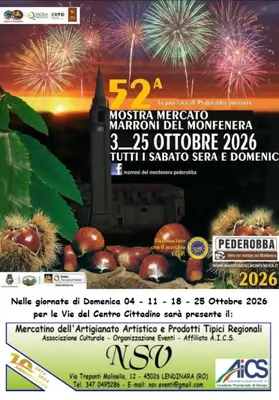
08/10/2026 25/10/2026
Festivals
From October 8th to 25th, Pederobba celebrates the Monfenera PGI Chestnut through gastronomic culture, local crafts, and autumn trails through the woods.
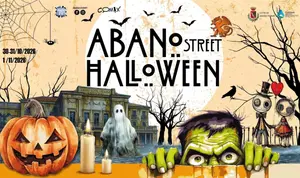
30/10/2026 01/11/2026
Festivals
From October 30 to November 1, 2026, Abano Terme celebrates autumn with a program of themed events including entertainment, crafts, and immersive play trails.
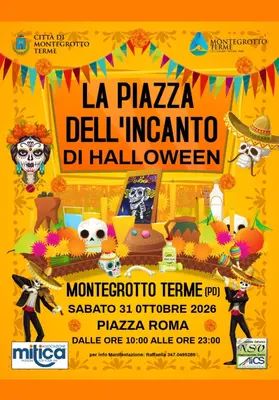
31/10/2026
Festivals
On October 31, 2026, Montegrotto Terme will host an event in Piazza Roma dedicated to folklore, magic, and the evocative spirit of Dia de Los Muertos.
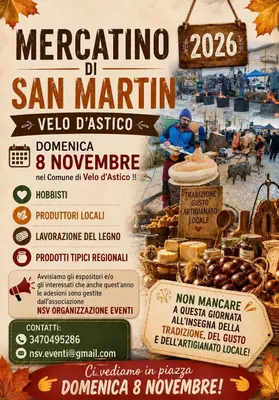
08/11/2026
Festivals
The village of Velo d'Astico celebrates rural tradition with the St. Martin's Market, an event dedicated to local craftsmanship and seasonal typical products.
08/11/2026 11/11/2026
Festivals
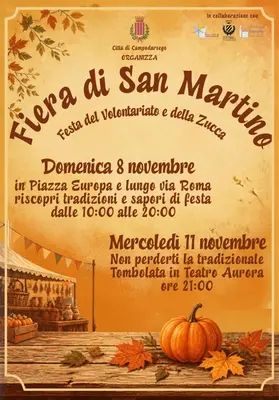
Campodarsego celebrates the San Martino Fair with the Volunteering and Pumpkin Festival, combining local traditions, autumnal products, and conviviality.
19/03/2027 21/03/2027
Festivals
The benchmark event for cycle tourism in Italy arrives in Padua, serving as a meeting point for professionals and two-wheeled travel enthusiasts.
